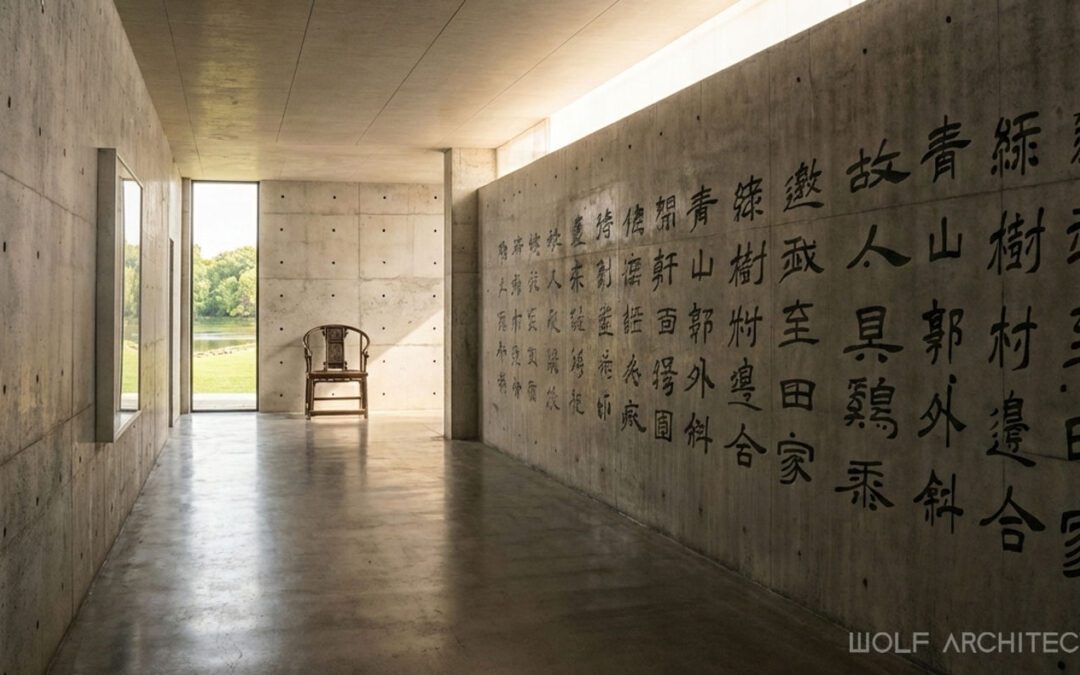
In 2026, we’re diving into the story of an architecture student whose journey transcends the linear paths typically expected in design. The Architecture of Detours explores the life of Taurus, a student who defies traditional educational and career routes to become an architect in Melbourne.
In this podcast series, we focus on the first chapters of this unconventional path. Taurus’ story begins in Thailand, navigating dual nationalities and early struggles with identity. His journey leads him from isolated childhoods to mastering creative challenges, using drafting pens as his first tool of expression. As his life weaves through academic barriers, social isolation, and personal growth, we see the influence of detours on his final destination.
Today, we explore how detours form the foundation of creativity, resilience, and a unique approach to design. Join us as we examine how every setback is simply part of a bigger creative plan—an idea we bring into every WOLF Architects project.
Speaker 1: Welcome in everyone. Today we have a very special mission for you. We are jumping straight into part one of a three-part series based on a truly fascinating biographical source text.
Speaker 2: It really is.
Speaker 1: Yeah. It’s called The Architecture of Detours: Building a Life Without a Straight Line. And just to be clear up front, we are focusing purely on the first four chapters of this story today.
Speaker 2: Right. Setting the foundation.
Speaker 1: Exactly. We are looking at the highly unconventional, totally unpredictable, and winding path of how a young boy growing up in Thailand fought his way to becoming an architecture student in Australia.
Speaker 2: Which is a wild ride.
Speaker 1: It really is. And look, we are not looking at the massive global studio he builds later on. That is for parts two and three. Today is strictly about the roots. So, okay, let’s unpack this because the author introduces a brilliant metaphor right on the first page addressing you, the reader. He talks about a Chinese elm tree.
Speaker 2: Ah, yes, the elm tree.
Speaker 1: He notes that society constantly demands we walk a straight predictable line, right?. Like a flawless architectural blueprint. But he says his life has been exactly like this Chinese elm.
Speaker 2: Meaning it’s all over the place.
Speaker 1: Right?. Its branches stretch out in these wild, unpredictable directions, weathering storms, growing sideways before they even grow up. But ultimately, they create this complex, beautiful canopy. It is a total rejection of the straight line.
Speaker 2: And that sets the analytical tone beautifully for what we are going to explore today. What’s fascinating here is that this text is not a standard manual on how to draft buildings or pass university exams.
Speaker 1: Not at all.
Speaker 2: It’s a master class in resilience, the art of pivoting and unconventional problem solving. It’s an exploration of how life’s detours—you know, closed doors, academic failures, the side quests—actually provide us with unique indispensable skills.
Speaker 1: The branches of the tree.
Speaker 2: Exactly. The branches of that Chinese elm are not mistakes. They are the structural integrity of the tree. Taurus’s journey actively challenges the modern obsession with linear progress. We are fed this narrative that to get from point A to point B, you simply must follow a strict standardized syllabus.
Speaker 1: Just check the boxes.
Speaker 2: Right?. But this text argues that sometimes mastering your craft requires going wildly off script.
Speaker 1: Which honestly makes me wonder where that instinct to go off script even begins. Let’s start in the 1970s in Thailand. Set the scene for us because Taurus wasn’t just, you know, a typical local kid growing up in Bangkok. He was navigating a very specific kind of cultural intersection from the moment he was born.
Speaker 2: He really was. He was born in Australia but moved to Thailand as an infant. So from day one, he is navigating dual nationality. He is the son of a Thai and Chinese father and an Australian mother.
Speaker 1: So a real blend of backgrounds.
Speaker 2: His identity is a complex blend. Yeah. He actually spoke Thai before he could speak English, which prompted his parents to enroll him in a local all-Thai kindergarten. But in 1970s Thailand, the cultural landscape was very different than it is today.
Speaker 1: How so?.
Speaker 2: Well, being what was colloquially referred to as a “half-child” meant he stood out visibly and constantly. The text specifies that he wasn’t subjected to physical bullying or beatings, but there was a profound lingering subconscious feeling of insecurity.
Speaker 1: Just from being different.
Speaker 2: Yeah, he was physically smaller. He looked distinctly different from his peers and he internalized that difference deeply.
Speaker 1: Let’s pause on that isolation for a second because I imagine it wasn’t just about looking different at school. The text mentions a significant gap in his family dynamic during those early years, right?.
Speaker 2: Precisely. The isolation was compounded at home. He had no siblings until he was 7 years old.
Speaker 1: Wow. Seven years as an only child.
Speaker 2: In the context of early childhood development, that is a massive void. He didn’t have friends to play with outside of school hours, no cousins nearby, no neighborhood kids to run around the streets with.
Speaker 1: So, he’s just on his own.
Speaker 2: If we connect this to the bigger picture, we have to consider what that level of isolation does to a developing mind, especially in the 1970s. I mean, this is an era before iPads and endless digital entertainment for you to just tune out with.
Speaker 1: Right?. No streaming services.
Speaker 2: Exactly. Toys were relatively scarce. Television programming was predominantly in black and white. And for him, there was virtually nothing broadcast in English.
Speaker 1: So, you have this highly intelligent, isolated kid in a pre-digital world. I’m assuming he doesn’t just sit there staring at the wall. How does he cope with that environment?.
Speaker 2: He retreats inward.
Speaker 1: He becomes what he describes as a lone wolf. He turns to drawing. But it is crucial to understand that he wasn’t drawing in the way most kindergarteners draw.
Speaker 2: He wasn’t just scribbling stick figures.
Speaker 1: No, he wasn’t trying to make beautiful colorful pictures to stick on the refrigerator. He was drawing to invent entire controllable worlds. He created elaborate battlefields, imagined fleets of tanks and planes, constructed three-dimensional objects out of scrap paper and tape.
Speaker 2: That’s intense for a little kid.
Speaker 1: Drawing became his sanctuary. It was a cognitive space where he finally belonged primarily because he was the sole architect of the rules. This was instinctual world-building. He was exerting control over a micro environment because he felt a lack of control and belonging in the macro environment.
Speaker 2: That makes total sense. He’s literally drafting a world where he fits.
Speaker 1: Yeah.
Speaker 2: But moving from making paper tanks to actually pursuing architecture, that’s a massive leap. When does that specific spark happen?.
Speaker 1: The turning point occurs when he is 7 years old. His father, who is transitioning into property development at the time, hires a full-time architect.
Speaker 2: Okay.
Speaker 1: And this architect sets up a studio space and young Taurus is completely mesmerized. He watches this professional use drafting pencils, intricate stencils, and construct these tiny, perfectly scaled models of actual buildings.
Speaker 2: It’s like a real life version of what he was doing with scrap paper.
Speaker 1: Exactly. Taurus becomes so utterly obsessed that he spends hours lingering in the studio asking endless rapid-fire questions. It gets to the point where the architects literally have to lock the door to their studio just so they can concentrate on their work.
Speaker 2: Just to keep the boss’s kid out.
Speaker 1: Right?. So they don’t have to entertain him all day. But the door being locked didn’t matter. The passion had already been ignited.
Speaker 2: And here’s where it gets really interesting to me because the text details a moment when he is 10 years old that just blew my mind.
Speaker 1: Yeah.
Speaker 2: Yes. He has been saving up his pocket money. He leaves his house, walks 15 minutes completely alone to a department store in Bangkok and makes a purchase. He spends his entire life savings.
Speaker 1: Which was a lot back then.
Speaker 2: At the time, it was 500 baht, which was roughly $20. In the early 1980s, for a 10-year-old, that is a fortune. He could have bought action figures, comic books, literally any toy on the market. Instead, he buys a 0.1 mm Rotring drafting pen.
Speaker 1: It’s incredible.
Speaker 2: I need you to explain what that actually is to anyone listening because a 0.1 millimeter pen isn’t just a standard ballpoint you pick up at the grocery store, is it?.
Speaker 1: Not at all. A Rotring pen is a highly specialized professional-grade technical drawing instrument. The 0.1 millimeter refers to the width of the line it produces, which at the time was the thinnest, most precise line mechanically possible.
Speaker 2: Wow.
Speaker 1: These pens do not use a traditional nib or a rolling ball. They use a tiny microscopic metal tube with a wire inside it to regulate the flow of India ink.
Speaker 2: That sounds incredibly fragile.
Speaker 1: It is notoriously fragile. If you don’t hold the pen at the perfect vertical angle, it won’t write. If you press even a fraction too hard, you will bend the microscopic tube and ruin the pen instantly.
Speaker 2: Oh man. And that’s 20 bucks down the drain for a 10-year-old.
Speaker 1: Exactly. Plus, if you don’t clean it meticulously, the India ink dries and clogs the mechanism, rendering a very expensive tool completely useless. For a 10-year-old to desire that specific tool shows a mind that is desperately craving exactness, structure, and absolute control.
Speaker 2: He’s not messing around.
Speaker 1: No. He takes this highly sensitive professional instrument and starts using it to do his regular everyday school homework. He is fully envisioning his future identity.
Speaker 2: Okay, I have to play devil’s advocate here for a second. It’s an amazing anecdote, sure, but isn’t that just a hobby?. A lot of kids get obsessed with niche tools or collections. Did this drafting obsession actually translate to his academic life or was it just a distraction?.
Speaker 1: It translated into a massive academic roadblock actually, which brings us to his ultimate nemesis, algebra.
Speaker 2: Ah, algebra.
Speaker 1: There is a very sharp psychological contrast between the precision of his drafting pen and the abstract nature of algebraic equations.
Speaker 2: Why is that contrast so sharp though?. Drafting involves math, doesn’t it?.
Speaker 1: Drafting involves geometry and spatial logic. It is visual. It’s tangible and it’s proportional. You can physically see the relationship between a line and a structure.
Speaker 2: Right?.
Speaker 1: Algebra, especially the way it is traditionally taught, is highly abstract. It relies on invisible logic, theoretical numbers, and rigid standardized rules that don’t immediately translate to a physical object in a 10-year-old’s hands.
Speaker 2: He’s just numbers on a board.
Speaker 1: Precisely. The text notes that while complex algebraic equations were being written on the chalkboard, Taurus was invariably daydreaming or using his Rotring pen to draw under the desk. Consequently, his grades began to slip significantly.
Speaker 2: And I assume his parents stepped in at this point to correct the course, like get a tutor.
Speaker 1: Actually, no. The author provides important context here. His parents were highly career-focused and deeply involved in their own professional lives. This meant Taurus had virtually no supervision when it came to his homework or academic discipline.
Speaker 2: So, no one was looking over his shoulder.
Speaker 1: There was no one checking his math worksheets, no one enforcing study habits, no scaffolding to help him bridge the gap between his spatial intelligence and the abstract requirements of his school curriculum.
Speaker 2: That’s tough.
Speaker 1: Without that support, his school reports fill up with warnings. Between the ages of 10 and 13, his academic progress practically stalls. He is failing.
Speaker 2: It really makes you wonder how many kids are written off as poor students simply because their specific genius doesn’t map onto a standard algebra test. I mean, he’s mastering a microscopic professional drafting tool, but because he can’t solve for X, the school labels him a problem.
Speaker 1: Exactly. And because he was labeled a poor student, the school sends a firm letter to his parents suggesting he needs serious discipline. The proposed solution: at 13 years old, he is packed up and sent away to the United World College or UWC in Singapore. It is a boarding school. Taurus explicitly describes receiving this news as feeling like a “jail sentence”.
Speaker 2: A jail sentence. That’s heavy.
Speaker 1: He is terrified. He’s an isolated kid who has heard all the classic horror stories about the brutality of boarding school culture.
Speaker 2: And it starts terribly for him, doesn’t it?. He doesn’t just walk in and start fresh with a clean slate.
Speaker 1: No. Before he can even begin classes, he has to sit for academic assessment tests to determine his placement. And because of his profound struggles with subjects like algebra, he completely bombs the assessments.
Speaker 2: Oh no.
Speaker 1: He is placed in the absolute lowest possible academic levels across the board. It is a brutal, humiliating start.
Speaker 2: But the text suggests that despite this awful beginning, UWC wasn’t actually a traditional punitive boarding school.
Speaker 1: Right. UWC was actually a progressive world-class institution that fostered a lot of curiosity. Though it took him a full year to realize that and settle in during those highly vulnerable early days when he is in the lowest classes and feeling incredibly insecure, he encounters a boy who alters his trajectory, a boy named Michael Lou.
Speaker 2: Paint a picture of Michael Lou for us because the text makes him sound incredibly intimidating.
Speaker 1: Michael is a year older than Taurus, but physically and socially, he is miles ahead. He’s described as confident, charismatic, highly intelligent, and physically imposing. Built like a young Bruce Lee.
Speaker 2: Wow. Okay.
Speaker 1: And Michael zeros in on Taurus. He teases him. Now, the adult Taurus looking back on this notes that it was likely just standard harmless teenage boy posturing.
Speaker 2: Just kids being kids.
Speaker 1: Yeah. But for a 13-year-old who is homesick, frustrated, isolated, and carrying the shame of being placed in the lowest academic tier, the teasing was absolutely unbearable.
Speaker 2: It’s the perfect recipe for an explosion. You corner an isolated kid who is already feeling like a failure. And the text says Taurus finally reaches his breaking point. One day, he just snaps. He throws a punch directly at Michael Lou. Now, considering the physical description of Michael, Taurus must have been expecting to get completely demolished.
Speaker 1: Oh, he was fully bracing for a massive brawl. He expected the traditional boarding school fist fight. But Michael does something entirely unexpected.
Speaker 2: What does he do?.
Speaker 1: He doesn’t block it and counter. He doesn’t retaliate. He doesn’t even say a word. He simply turns his back and walks away.
Speaker 2: Wait, he just walks away. Does Taurus view that as a victory?. Does he think, “Oh, I intimidated this kid”?.
Speaker 1: Not at all. If we connect this to the bigger picture, this is a phenomenal lesson in the psychology of restraint. For Taurus, that single nonviolent action made a staggering impression.
Speaker 2: It totally disarmed him.
Speaker 1: He didn’t feel victorious. He felt outclassed. He suddenly realized that the person he despised in that heated moment was actually the person he desperately wanted to be. He wanted that quiet, unshakable confidence.
Speaker 2: That’s a huge realization for a 13-year-old.
Speaker 1: It is. He realized that true power isn’t about engaging in every fight you’re invited to. It’s about having such absolute control over your own ego that you can choose not to react. It completely shifted his perspective on maturity.
Speaker 2: It’s almost a martial arts philosophy. Be like water. Let the aggression pass through you.
Speaker 1: But they don’t just become best friends after this, do they?. How does their dynamic evolve?.
Speaker 2: They actually keep their distance for a couple of years. Yeah. But when they are 15 or 16, they cross paths again in a very specific environment: the Craft, Design, and Technology class, commonly known as CDT. For those of us listening who didn’t go through the British school system in the 80s, what exactly is CDT?. Is it just like a wood shop class?.
Speaker 1: It’s much more rigorous than standard wood shop. CDT was a curriculum designed to blend practical craftsmanship with design theory. You weren’t just following instructions to build a basic birdhouse. You had to conceptualize a product, draft technical plans, source materials, and execute the build to a high standard.
Speaker 2: Sounds perfect for him.
Speaker 1: It was. Taurus had found this class under a wonderful, highly supportive teacher named Mr. Garrett. For Taurus, CDT was his sanctuary from the daily horrors of algebra. It was the one room in the school where his spatial intelligence and his mastery of tools like the Rotring pen were actually celebrated. It was his turf.
Speaker 2: And then Michael Lou walks in.
Speaker 1: Exactly. Taurus sees this cool, athletic, confident kid walk into his sanctuary and his immediate thought is defensive. He decides right then and there that he is going to dominate this class. He’s going to be the undisputed king of the CDT studio.
Speaker 2: But the twist here is that Michael isn’t just a jock taking an easy elective to coast through.
Speaker 1: Michael is incredibly talented. He possesses a natural aptitude for design and technical drawing. He quickly becomes the shining star of the CDT class.
Speaker 2: Oh man.
Speaker 1: But because of that earlier lesson in restraint, this doesn’t devolve into a physical or verbal rivalry. Instead, it channels into an intense, entirely silent design rivalry.
Speaker 2: How does a silent design rivalry actually work in practice?. Are they just glaring at each other from across the room?.
Speaker 1: It’s an escalation of craft. Taurus would spend hours working on a project, utilizing all his skills to produce something he believes was absolutely flawless. He would look at it with pride. Then he would glance over at Michael’s desk and Michael would have executed something just slightly better, slightly more refined or conceptually deeper.
Speaker 2: That is so frustrating.
Speaker 1: It infuriated Taurus, but it also became an incredible catalyst. Michael inadvertently pushed Taurus to absolute limits he never would have reached on his own. At one point, Michael produced a cardboard architecture model that was so flawlessly executed the teacher openly asked if he had paid a professional to build it.
Speaker 2: That is wild. The nemesis becomes the muse. Because of Michael’s standard, Taurus pours his entire soul into his CDT portfolio. And there is a specific project he designs for this class that we have to talk about because it feels like a massive foreshadowing for the entire premise of the source text.
Speaker 1: Right?. For his major final project in this class, the teenage Taurus conceptualizes and designs a house, but it isn’t a standard functional box. He designs a house with a massive living tree growing right through the exact geometric center of the structure.
Speaker 2: So, the entire home—the walls, the roof, the living spaces—is conceptualized specifically to protect, embrace, and accommodate this unpredictable living thing.
Speaker 1: Which brings us right back to the Chinese elm tree metaphor from the introduction. The idea of designing life around unpredictable growth rather than forcing the growth to fit a straight, rigid structure. Exactly. He is unconsciously drafting his own life philosophy right there in CDT. Through this class, he builds this incredible portfolio. He survives his early academic failures and he gains a tremendous amount of self-worth. But as graduation approaches, he hits a logistical wall regarding his university ambitions.
Speaker 2: Right. Because his goal isn’t just to graduate. His goal is specifically to attend the University of Melbourne in Australia for architecture. Why was staying at UWC in Singapore an issue for that goal?.
Speaker 1: It comes down to the friction between international academic systems. UWC followed the British system, meaning that to finish his final years there, he would have to enroll in the full International Baccalaureate or IB program.
Speaker 2: And for anyone unfamiliar with it, the IB program is a highly rigorous globally recognized curriculum. It requires a massive workload across multiple disciplines like sciences, humanities, languages, and it culminates in these heavily weighted exams.
Speaker 1: Yes. And because of how the academic calendars align between the northern hemisphere-based international schools and the Southern Hemisphere Australian University system, staying to complete the IB in Singapore would mean he would graduate and enter university a full year and a half later than his peers back in Australia.
Speaker 2: So, he’d be behind.
Speaker 1: He didn’t want to lose that time. He wanted a smoother, direct pathway into the Australian system. So, he seeks advice from a school counselor.
Speaker 2: Which leads us to a section I think everyone can relate to in some form: the “glossy brochure trap”. It’s basically the 1980s equivalent of getting completely catfished by an Airbnb listing.
Speaker 1: That is a perfect analogy.
Speaker 2: The counselor points him toward a very specific option: Peninsula Grammar School located in Mount Eliza down in the city of Victoria, Australia. Now remember, this is the pre-internet era.
Speaker 1: Right. No Google.
Speaker 2: Taurus cannot look up virtual campus tours. He cannot go on Reddit to read unfiltered student experiences or check local weather patterns. He has to base this massive life decision entirely on a counselor’s verbal recommendation and a glossy, professionally photographed school brochure that makes the place look like an absolute academic paradise.
Speaker 1: And trusting the brochure, he pulls the trigger. He finishes his intense GCSE exams, which are those incredibly high stakes British exams you take around age 16 that dictate your academic path. And the moment he finishes, he gets on a plane.
Speaker 2: No break at all.
Speaker 1: He takes absolutely zero summer break and flies to Australia to jump straight into the middle of their academic year, right into Year 11. He’s assuming his lone wolf resilience will just carry him through the transition.
Speaker 2: But the reality on the ground was a jarring, almost violent culture shock. The text paints a very bleak, isolating picture of his time at Peninsula Grammar.
Speaker 1: What made it so unbearable for him?. Was it just the academics being too hard?.
Speaker 2: It was everything all at once. Environmentally, he goes from the bustling, deeply diverse, humid, urban environments of Bangkok and Singapore to this isolated, rigid, traditional all-boys culture in Mount Eliza. Demographically, he is an outsider joining mid-year surrounded by an overwhelmingly white Australian student body where social hierarchies and friendship groups are already deeply cemented.
Speaker 1: So he feels that half-child isolation all over again.
Speaker 2: Precisely. Plus the climate shock.
Speaker 1: The climate shock was severe. He arrives right in the middle of the biting freezing Melbourne winter, having only ever lived in tropical heat. The school infrastructure was old and cold. Furthermore, he explicitly notes that the boarding school food was awful.
Speaker 2: Just a miserable combination.
Speaker 1: So you have a teenager who is socially isolated, freezing cold, poorly nourished and fundamentally exhausted because he skipped his summer break to jump straight back into high stress academics.
Speaker 2: He tries to grind it out though, right?. He doesn’t just quit on day one.
Speaker 1: He tries to endure it using sheer willpower. He grinds it out for three agonizing months, but willpower is a finite resource. Eventually, the physical and psychological fatigue compounds and he hits a wall.
Speaker 2: And this isn’t just a metaphorical wall where he decides he doesn’t like the school. It reads like a complete bodily shut down. One morning he wakes up with a head cold.
Speaker 1: Now, normally a kid with his level of ambition would just take some medicine and push through it, right?.
Speaker 2: Right.
Speaker 1: But he has absolutely zero reserves left. He stays in bed. He physically refuses to get up. He doesn’t want to do the homework. He doesn’t want to eat the awful food. He doesn’t want to engage with anyone in the dorms. He just pulls the sheets over his head and wants to disappear.
Speaker 2: The school’s reaction highlights the rigidity of the environment. The school cleaner comes into his room, sees him in bed, and actually yells at him to get up. So aggressive.
Speaker 1: He is eventually dragged out of bed and taken to the housemaster who delivers a stern disciplinary lecture about laziness and duty.
Speaker 2: And how does Taurus react to being disciplined?.
Speaker 1: The author describes the feeling perfectly. The lecture simply washed over him. He felt zero guilt, zero fear, zero motivation. He was completely apathetic. In that moment of absolute burnout, he achieved a strange kind of clarity. He knew with absolute certainty that it was over. He had made a brave mistake coming to Mount Eliza.
Speaker 2: Let’s challenge the narrative here for a second for you listening. We are constantly fed this cultural mantra that “winners never quit”. Society heavily stigmatizes giving up, especially when your parents are paying for an expensive private school. Isn’t staying in bed just a failure of character?.
Speaker 1: That is the standard societal view, but this text argues the exact opposite. This is a critical juncture in his life. When he finally gets on a pay phone to speak to his parents, they can hear the absolute hollow defeat in his voice. To their immense credit, they offer him a way out. He can leave Australia and return to Bangkok.
Speaker 2: Which he takes.
Speaker 1: He takes it immediately. And the text frames this not as a failure, but as the profound necessity of the “strategic retreat”. Staying in that bed in Mount Eliza wasn’t a lack of discipline. It was his body and mind refusing to continue down a toxic, deeply misaligned path.
Speaker 2: Listen to your body.
Speaker 1: Exactly. By hitting that wall and by possessing the self-awareness to admit a mistake, he actually saved his long-term trajectory. Giving up on Peninsula Grammar was the only logical way he could succeed.
Speaker 2: But retreating to Bangkok means he has to figure out a new academic plan again with zero break. He enrolls at the International School of Bangkok or ISB. And the tonal shift here is massive.
Speaker 1: It is night and day going from the strict freezing uniform-heavy British style boarding school in Australia to ISB. ISB is described by the author as walking directly onto the set of a vibrant 1980s American teen movie.
Speaker 2: I like John Hughes stuff.
Speaker 1: He literally compares the atmosphere to films like The Breakfast Club or the show Beverly Hills 90210. It is a bastion of American educational freedom. You don’t wear uniforms. You have a massive campus. You have the freedom to curate your own schedule and study what you are passionate about.
Speaker 2: It sounds perfect for him, but there’s a logistical nightmare waiting for him at the admissions office, isn’t there?.
Speaker 1: Yes. Because he left the Australian school in the middle of Year 11, technically missing crucial course credits, the ISB administration looks at his transcripts and makes a decision. They want to put him back a full year. They want him to repeat Year 11.
Speaker 2: So the very thing he went to Australia to avoid—losing time—is happening anyway.
Speaker 1: Exactly. And this is the moment we see Taurus evolve. He transforms from a passive student accepting his fate into a fierce, highly effective self-advocate. He refuses to be set back. He demands a meeting with the administration. He looks the academic counselors directly in the eye, slaps his stellar, highly graded UWC reports on the table, and vehemently pleads his case.
Speaker 2: What’s his argument?.
Speaker 1: His argument is based purely on a promise of output. He tells them, “I will be your star student”. He promises to take extra classes during his lunch break, stay late, do independent study, whatever it takes to make up the missing credits. He negotiates his way into the senior year through sheer audacity.
Speaker 2: And the school actually buys it. They let him skip the repeat year, but the workload he takes on to fulfill that promise is staggering.
Speaker 1: He fundamentally forfeits his own youth. He gives up all his free study periods. To put it in perspective, the average senior at ISB was taking six subjects. Taurus voluntarily takes nine.
Speaker 2: Nine subjects. That is insane.
Speaker 1: Strategically, he uses the American elective system to dodge advanced algebra wherever it is legally possible to do so. But he bravely and perhaps agonizingly commits to keeping International Baccalaureate Physics and IB Maths because he has heavily researched the prerequisites for the University of Melbourne’s architecture program and those subjects are non-negotiable.
Speaker 2: Despite the insane workload, he actually thrives at ISB. He becomes a legend on campus. Everyone knows him as the “art man”. He basically lives in the art studio. He even wins the highly coveted honor of designing the senior graduation t-shirt. He’s finally popular. He’s respected. He’s on track. But taking nine subjects while living with zero parental oversight regarding his day-to-day schedule is a recipe for a logistical disaster.
Speaker 1: Which brings us to one of the most incredible moments in the entire source text. It is an incident that became a literal urban legend at ISB.
Speaker 2: The IB Physics exam incident. Set the stakes for him.
Speaker 1: IB Physics is notoriously difficult. More importantly, it is a hard prerequisite for his dream of getting into architecture school. This specific final exam is worth 50% of his total grade for the year.
Speaker 2: Half his grade.
Speaker 1: It is a make-or-break assessment. The exam is split into two halves, administered on different days. Taurus, overwhelmed by his nine subject schedule, completely messes up the dates. He entirely misses the first half of the exam.
Speaker 2: Missing a 50% exam would induce a panic attack in almost anyone. Most students would be crushed by the shame. They’d be begging the teacher for a makeup test or they’d just drop the class. What does Taurus do?.
Speaker 1: Taurus operates on a level of pure, almost delusional optimism. He realizes he missed the first half, but he does the math in his head. He figures that if he just shows up for the second half and scores a flawless 100% on it, he will mathematically achieve a 50% for the class overall, which is technically a passing grade.
Speaker 2: I can just picture him strolling into the exam hall for part two, totally calm, thinking, “I’ll just ace this half. No problem. Disaster averted”.
Speaker 1: He walks into the hall, takes his seat, and prepares to write. But the coordinating teacher spots him. The teacher marches over and demands to know why he is even sitting there since he missed part one.
Speaker 2: And Taurus calmly explains his wild mathematically precise logic about getting 100% on part two to pass the class.
Speaker 1: And when he says this out loud, the rest of the students in the quiet exam hall actually laugh out loud at the sheer audacity of the plan. This laughter infuriates the teacher. He feels his authority is being mocked. The text provides the exact verbatim dialogue of this confrontation and the tension is cinematic.
Speaker 2: I have the quotes right here. Let’s run through it. The teacher loses his temper and yells at him in front of the whole hall: “Who do you think you are? You cannot just pick and choose whichever exam you want or do not want to do as if this is some kind of examining buffet service. You are finished here, young man”.
Speaker 1: And this is where Taurus pushes back. He doesn’t apologize. He challenges the technical and financial authority of the teacher’s decision. Taurus replies: “My parents paid for the course and the exam, and I have spent a year in the class doing all the assignments. So, it is actually my right to pick and choose whichever part I want. It is even my right to fail. But until the moment you deregistered me, I technically had not failed yet. So, in fact, it is you, sir, who has caused me to fail”. That logic—it’s infuriatingly sound. He’s arguing contractual rights with a high school physics teacher and it pushes the teacher right over the edge. The teacher snaps back: “Well, it is too late. You cannot do it”.
Speaker 2: And suddenly, the laughing in the hall completely stops. The room goes dead silent. You could hear a pin drop.
Speaker 1: Dead quiet.
Speaker 2: Taurus stands there. And in that silence, he does something remarkable.
Speaker 1: Yeah.
Speaker 2: He analyzes the situation. He looks at the red-faced teacher and realizes that no amount of emotion, no screaming, no begging, no perfectly constructed logical argument is going to change this man’s mind. The ego has taken over.
Speaker 1: So what does he do?.
Speaker 2: So Taurus looks at the teacher, completely calm, and says, “Okay, I will see you later”. And he simply turns around and starts walking toward the door.
Speaker 1: This is the moment the teacher completely unravels because the teacher wanted the fight. He wanted the submission, the groveling. Seeing a teenager just walk away robs him of the power dynamic. The teacher yells, “Wait, do not turn your back on me! Do you not have something to say for yourself? This is absurd!”. And here is where Taurus channels Michael Lou from years ago in the boarding school in Singapore. He utilizes that profound untouchable restraint. He stops at the door, turns back, and simply says, “What do you want me to say? You said it is over, so it is over. Good luck, class”.
Speaker 2: Wow.
Speaker 1: And he walks out.
Speaker 2: Let me stop you there for a second because I want to push back on this. The text clearly frames this as a victory of restraint. But practically speaking, isn’t walking away from a 50% exam for a required class incredibly reckless?. He just torched his prerequisite for architecture school. How does the author justify that as a win rather than an act of teenage self-sabotage?.
Speaker 1: That is the essential tension of the chapter. On paper, it is an academic disaster. But psychologically, it is his defining moment of emancipation. This raises an important question about the power dynamics not just in education but in adulthood. The teacher was actively baiting him, trying to provoke an emotional reaction to validate his own authority. Taurus realized that the true power wasn’t in winning the argument because the argument was un-winnable. The true power was in recognizing a trap, refusing to give his energy to someone operating in bad faith, and simply removing himself from the room. Walking away was his most powerful protective move. It taught him precisely what kind of rigid, ego-driven educator he never wanted to be.
Speaker 2: I guess there’s a massive difference between quitting because you’re tired, like at Mount Eliza, and walking away because you refuse to play a rigged game. It makes you wonder how often we engage in un-winnable arguments, whether at work or in relationships. Letting someone drain our energy just to validate their ego, and simply turning around and walking away would be the ultimate power move.
Speaker 1: Absolutely.
Speaker 2: But as you pointed out, liberating or not, he still needs to get into university. He doesn’t have the physics credit. So, how does he manage the next step?. This brings us to section five: Crossing Oceans on a Hope.
Speaker 1: The university application process in the 1980s pre-internet era was a completely different beast than it is today. You couldn’t just click a button and submit a PDF. It involved snail mail, requesting physical certified documents, developing photographs of your artwork, paying international postage, and waiting months for a reply.
Speaker 2: A total logistical nightmare.
Speaker 1: It was tedious. And because his parents were busy, he was doing it entirely alone. Furthermore, the school counselors at ISB were primarily geared toward funneling students into the American university system. So, he applied to a few top-tier American universities as backups, mostly just to satisfy the counselors. And shockingly, he gets accepted into MIT and Cornell, two of the most prestigious, fiercely competitive architecture programs on the planet.
Speaker 2: For a kid who struggled with algebra, that has to be an insane confidence boost.
Speaker 1: It was incredibly validating. MIT and Cornell wanted him based on his portfolio and his diverse background. But Taurus looks closely at their course structures. He realizes that their specific architecture programs are heavily engineering-based, which means they require advanced calculus, heavy physics, and—you guessed it—more algebra.
Speaker 2: The ultimate nemesis returns.
Speaker 1: He knows his own strengths and he knows that environment will crush him. Plus, his heart has remained absolutely set on the University of Melbourne in Australia. That is his number one choice, with RMIT (the Royal Melbourne Institute of Technology) as his backup.
Speaker 2: So, he declines MIT and Cornell. That takes guts. Does RMIT give him a shot?.
Speaker 1: RMIT actually offers him a chance to sit a specialized entrance exam right there at the Australian Embassy in Bangkok. He arrives at the embassy eager and confident. But here we see a fascinating psychological misstep born out of sheer desperation.
Speaker 2: What happened?.
Speaker 1: The entrance exam is practical. It asks him to design and draw a series of conceptual projects within a time limit. He starts well, but as the clock ticks down, his desperation to secure a spot in Australia takes over. He wants to prove to them how good he is. So he overworks every single drawing.
Speaker 2: Oh no.
Speaker 1: He adds intricate details far beyond what the brief asks for. He overthinks every line, every shape, trying to cram his entire skill set onto the page. He “overcooks it,” as he describes it.
Speaker 2: I think we can all relate to that impulse. You want a job so badly, you over-explain your qualifications in the interview and end up sounding desperate. You over-engineer a simple project to show off and you end up missing the actual brief.
Speaker 1: Exactly. Because the RMIT exam was designed to test conceptual clarity and abstract thinking rather than sheer technical rendering, his overworked, cluttered drawings fail the assessment. RMIT rejects his application.
Speaker 2: So RMIT says no. And what about his dream school, Melbourne University?.
Speaker 1: Absolute silence. Snail mail produces nothing. February rolls around. The university semester in Australia is literally about to begin. And he hasn’t received an acceptance letter, a rejection letter, or a phone call.
Speaker 2: Most teenagers would accept defeat right there. They’d take a gap year or reapply to an American school. What does Taurus do?.
Speaker 1: He engages in an act of sheer audacious belief. He packs his suitcases, gets on a plane, and moves from Bangkok to Melbourne, Australia, operating on the pure assumption that he has been accepted and the letter just got lost in the mail.
Speaker 2: That is bordering on madness. He just shows up.
Speaker 1: He walks right onto the campus, finds the central administration office, and waits in line. When he gets to the desk, he gives them his name. The staff look through their physical ledgers. They look at him blankly and deliver the cold, hard reality: “We have no record of your application whatsoever. Furthermore, the architecture course has already started orientation and all places are completely full. Sorry, we cannot help you”.
Speaker 2: That has to be a gut punch. You flew across the world, skipped MIT, and you don’t even exist in their system.
Speaker 1: But Taurus refuses to accept the bureaucratic no. He doesn’t break down. He tells the clerk, “I am here now. I moved from Thailand. Who can I speak to?”. The clerk, probably just trying to get rid of him, tells him to go try finding someone over in the actual Faculty of Architecture building.
Speaker 2: So, he wanders over there. It’s orientation week, so the building is mostly empty as students are out at events. I can just picture the physical reality of this: a teenager dragging his portfolio through silent, brutalist concrete hallways, knocking on every single closed door, hoping someone, anyone, will answer. It’s the sound of total desperation, but also unrelenting determination.
Speaker 1: Finally, he knocks on a door and a department secretary answers. She listens to his crazy story—the lost application, the flight from Thailand—and she takes pity on him. Somehow, she manages to squeeze him in for a totally impromptu interview with Jeff Turnbull, the head of first-year architecture, and his associate Martin Fowl.
Speaker 2: So, he walks into this room with the heads of the department. He has no transcripts, no appointment. How does he pitch himself?.
Speaker 1: He gives what he openly admits is a very cheesy, deeply earnest speech. He looks these two esteemed academics in the eye and says, “I was born to be an architect”. And then he pulls out his secret weapon.
Speaker 2: The portfolio.
Speaker 1: Yes. His UWC Craft, Design, and Technology portfolio. The exact same portfolio he poured his soul into while silently competing with Michael Lou two years prior in Singapore.
Speaker 2: Full circle.
Speaker 1: He opens it up. The portfolio is filled with advanced technical drawing, meticulous model-making skills, incredibly complex two-point perspective illustrations rendered entirely in ink, and early intuitive concepts regarding environmental sustainability like the house built around the Chinese elm tree.
Speaker 2: Can we pause on two-point perspective for a moment?. That sounds like jargon, but it’s actually incredibly hard to do by hand.
Speaker 1: It is exceptionally difficult. Two-point perspective is a drawing method that uses two distinct vanishing points on a horizon line to create the highly realistic illusion of 3D depth on a 2D piece of paper. To do it flawlessly in ink without the aid of a computer requires a profound understanding of spatial geometry.
Speaker 2: It’s not something you just guess at.
Speaker 1: Right. When Professors Turnbull and Fowl look at this two-year-old portfolio, they are stunned. They recognize a raw, highly refined spatial intelligence that standard high school transcripts simply cannot capture. They see the exactness of the 10-year-old with the Rotring pen matured into a designer’s eye.
Speaker 2: And their reaction changes everything.
Speaker 1: They are so impressed by the tangible evidence of his talent that they do something entirely unprecedented. The architecture program has a strict government-capped limit of exactly 92 places. They are completely full. But behind closed doors, they circumvent the entire bureaucratic system and create a special, unprecedented 93rd spot specifically for Taurus.
Speaker 2: The 93rd spot. I get chills thinking about the validation of that moment. He becomes the first student in the faculty’s history to gain entry purely based on a physical portfolio. Think about what that means: his uneven high school grades didn’t matter. The physics exam he boldly walked out of in Bangkok didn’t matter. His lifelong nemesis, algebra, completely irrelevant in that room. His dedication to his craft, his willingness to fiercely advocate for himself, and that beautiful, tangible portfolio won him the day.
Speaker 1: And this incredible victory sets the psychological tone for his entire university experience. Which brings us to section six: Over-complicating Success. Entering Melbourne University, Taurus is fiercely determined to honor that 93rd spot. He feels an immense debt of gratitude to Turnbull and Fowl. He doesn’t just want to pass his classes. He wants to prove to them every single day that they made the right bet by breaking the rules for him.
Speaker 2: Does that mean he finally conforms and becomes a straight A rule-following student?.
Speaker 1: Quite the opposite. He rebels through overachievement. He does it in his classic, highly unconventional way. When he receives an assignment that he feels is too simple or straightforward, he actively challenges his professors by re-doing the brief in a much more difficult medium. If the syllabus asks for a simple pencil sketch, he renders it in unforgiving permanent ink. If they ask for a basic black and white conceptual drawing, he spends hours executing it in full layered color.
Speaker 2: I can imagine professors finding that incredibly annoying. It’s like, just do the homework as assigned.
Speaker 1: The course coordinators actually do pull him aside. They sit him down and tell him, “Please do not deviate from the brief. Do it exactly the way we asked so we can grade it on a standard curve”.
Speaker 2: So what does Taurus do?. Does he back down?.
Speaker 1: He complies maliciously. He cheekily starts submitting multiple versions of the exact same homework. He drafts the standard “boring” pencil version they explicitly asked for just to prove he can follow instructions. And then he slaps his enhanced ultra-complex fully colored ink version right next to it on the desk.
Speaker 2: I love that.
Speaker 1: They don’t know what to do with him. But they cannot deny his absolute precision and work ethic. He very quickly becomes known as a prodigy within the faculty.
Speaker 2: But what about his old nemesis?. Architecture still requires math. Does algebra finally catch up with him?.
Speaker 1: There is a compulsory first-year class called “Structures”. As Taurus quickly discovers, Structures is essentially just complex algebra wearing a hard hat. It is all mathematical load-bearing equations. But he is older now. He passes the class through clever evasion. He hyper-focuses on the conceptual and theoretical parts of the grading rubric to offset the math, scrapes together enough points to pass the mathematical components, and finally puts the beast of algebra to rest forever.
Speaker 2: He has conquered the system. But right in the middle of this triumphant first year, the text provides a truly hilarious, deeply ironic moment that we absolutely have to share.
Speaker 1: It is the perfect bureaucratic punchline. A few months into his first semester, Taurus takes a brief holiday back to Thailand to visit his parents. While he is at his childhood home, he checks the mail. He finds a formal, officially stamped letter from the University of Melbourne Central Administration. He opens it. It is his formal rejection letter.
Speaker 2: The letter that was supposed to arrive in February finally shows up.
Speaker 1: Exactly. The letter coldly states that he does not meet the criteria and has not been accepted into the university. Meanwhile, he has just finished a full rigorous semester as the star prodigy of their very own architecture faculty.
Speaker 2: That’s amazing.
Speaker 1: He is standing in his house in Bangkok holding the piece of paper that was supposed to legally dictate his future. And he just laughs out loud, crumbles it up, and tosses it right out the window. The bureaucracy had said a firm no, but his art, his portfolio, and his sheer audacity had already spoken a louder truth.
Speaker 2: You cannot contain a force of nature with a delayed form letter. And as he moves into his second year, we see that force of nature start to refine itself intellectually. He isn’t just drawing well, he is thinking differently.
Speaker 1: He becomes intensely interested in the architectural philosophy of minimalism. He begins designing these highly controversial ultra-clean spaces defined by vast blank walls and severe geometry. He is actively stripping away all the ornamental noise and decoration to focus entirely on the fundamentals: light, shade, volume, and proportion. This is incredibly complex, mature stuff for a second-year student. Thankfully, he is supported by a brilliant tutor named Alex Selenich, who understands exactly what Taurus is trying to achieve conceptually and gives him the academic backing to push those minimalist boundaries.
Speaker 2: This period also highlights a massive technological shift happening in the industry, right?. It’s the early ’90s. Computers are entering the studios.
Speaker 1: Yes. The tension between tactile craft and emerging digital technology becomes a major theme. The university introduces AutoCAD (computer-aided design software) into the curriculum. Now, the irony is that Taurus is actually highly proficient in CAD. He had taken a specialized diploma in it back in Bangkok.
Speaker 2: But he fundamentally loves the tactile physical craft of hand-drawing. He believes the connection between the hand, the pen, and the paper creates a soul in the design that a computer lacks.
Speaker 1: So, how does he handle the digital assignments?.
Speaker 2: For a major second-year assignment, the students are tasked with drafting a section of the highly complex Pompidou Center in Paris. The brief explicitly assumes they will use AutoCAD because the building’s exposed pipes and structural framework are too mathematically dense to draw efficiently by hand. Taurus decides to silently rebel. He drafts the entire intricate detailed structure completely by hand using his technical ink pens.
Speaker 1: He does a computer’s job by hand. How’s it received?.
Speaker 2: He submits it and he gets an A-grade. But the triumph is deeper than the grade. His line work, his spacing, and his penmanship are so absolutely flawless and mechanically precise that he actually fools the grading professor into thinking the drawing was plotted and printed by a computer.
Speaker 1: That is the ultimate flex. The 10-year-old with the Rotring pen has achieved absolute mastery over his tools. He proves that mastering the tactile fundamentals gave him an edge that no new software could replicate. He is riding high, getting straight A’s, establishing his reputation. But then in his third year, the relentless pace finally catches up to him.
Speaker 2: He receives a B, a single B-grade on a studio assignment.
Speaker 1: Let’s be real, a B is a perfectly good grade for 99% of university students. Why is this a crisis?.
Speaker 2: Because Taurus has been operating with a singular, exhausting, almost unhealthy obsession to honor that 93rd spot. He has tied his entire identity to architectural perfection. Getting a B shocks his system. He initially considers aggressively contesting the grade with the professor, but instead the B forces him to pause.
Speaker 1: A reality check.
Speaker 2: Exactly. He takes a massive psychological step back. He looks at his life and realizes that architecture has completely, utterly consumed him. He has no social life, no other outlets. He’s completely out of balance. He recognizes that if he doesn’t find a distraction, he’s going to burn out just like he did at the boarding school in Mount Eliza.
Speaker 1: So, he takes himself out on a solo date to clear his head. He goes to a local cinema and watches the iconic culturally massive Australian film Strictly Ballroom.
Speaker 2: Which is a film entirely about defying rigid straight-line rules in favor of passion and rhythm.
Speaker 1: Exactly. He is captivated by the confidence of the dancers, the physical movement, and frankly the romantic storyline. He sits in the theater and thinks, “Hey, I’m single. This looks like a fantastic way to meet girls, and I desperately need a hobby that has nothing to do with concrete or drafting ink”. So, on a whim, he enrolls in a local Latin dance school.
Speaker 2: He genuinely thinks he’s just adding a fun, casual activity to balance out his life. But the text leaves us on a brilliant, totally unexpected cliffhanger here. Dance introduces an entirely new set of physical and mental challenges that his brain craves. It requires rhythm, acute physical observation, real-time collaboration with a partner, and public performance.
Speaker 1: Very different from drawing lines.
Speaker 2: These are skills that are wildly different from sitting alone isolated at a drafting table as a lone wolf.
Speaker 1: Taurus believes he is just taking a break to make his architectural mind sharper. But as he steps onto the polished wood of the dance studio week after week, a completely different kind of energy begins quietly taking hold of him. He had fought so fiercely, crossed oceans, defied teachers, and knocked on empty doors for that 93rd spot, utterly convinced his destiny was permanently drafted in ink.
Speaker 2: He had absolutely no idea that his casual desire to learn a few Latin steps was actually brewing into a new all-consuming rhythm. A rhythm that was about to take his meticulously planned straight-line architectural world and turn it completely upside down.
Speaker 1: And that, my friends, is where we have to leave part one. You will have to join us for part two to find out exactly where that dance floor leads him because the pivot is staggering. But before we go, let’s just sit with the incredible journey we’ve explored today.
Speaker 2: It truly is a remarkable testament to unconventional growth. From the isolated 10-year-old boy exerting control over his world by spending his life savings on a fragile Rotring pen to the teenager who understood the profound power of a strategic retreat when his body shut down at Mount Eliza.
Speaker 1: Oh,.
Speaker 2: We analyzed the audacity required to negotiate his way into his senior year at ISB, the profound, almost dangerous maturity to walk away from an un-winnable fight with a physics teacher, and the unrelenting confidence to demand a place at a university that had literally lost his application.
Speaker 1: He never accepted the straight line society tried to force him onto. He grew exactly like that Chinese elm tree—reaching, bending, weathering the storms, and pivoting when a path was blocked. I want to leave you with a final thought to mull over today, building right off the end of this source text: we so often think of balance as taking a brainless break from our main passion. We view hobbies as mere distractions or ways to shut off. But look at Taurus taking up Latin dance just because he got a B in architecture. What if the detours, the side quests, and the hobbies that seem entirely unrelated to our goals are actually the very things that teach us the rhythm, the patience, and the lateral perspectives we desperately need to finally master our primary obsessions?. Think about what your own “Latin dance” might be. Thank you so much for joining us on this deep dive. We cannot wait to see you back here for part two. Until then, keep exploring those detours.